Showing posts with label Sephardic Educational Center. Show all posts

Sunday, August 1, 2010

Shabbat at the SEC was spiritually uplifiting...


For those of us that have experienced the start of Shabbat in the Old City of Jerusalem praying at the Western Wall, there is only one word to describe it…magical! Since the SEC is situated only five minutes from the Western Wall, our group enjoyed a very spiritual and uplifting Shabbat praying in the evening at the Kotel. We later enjoyed a fun filled a relaxing Shabbat dinner in the SEC’s courtyard area.

Shabbat morning was filled with continued prayer at the SEC’s chapel with their donated Torahs and followed with lunch. Later in the afternoon the rabbis had a lively discussion about Jewish religious laws in a Q&A secession. Finally Shabbat was brought to a close in an uplifting Havdalah. Ultimately Shabbat at the SEC in Jerusalem turned out to a remarkably relaxing, spiritual and thought provoking time as our summer seminar was completed.

-- Karmel Melamed

Friday, July 30, 2010

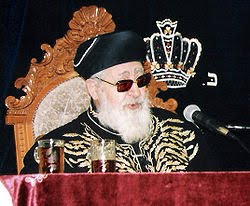
Day 4: Picard sheds light on the real Rabbi Ovadia Yosef


Yesterday we were visited by Dr. Ariel Picard, a research fellow at the Jerusalem based Hartman Institute who researches contemporary Jewish law. In 2007 he his book on the Jewish legal decisions of the well known Rabbi Ovadia Yosef, former Sephardic Chief Rabbi of Israel. Picard joined our summer seminar group to shed light on Yosef’s mindset when dealing with modern problems.

Picard said that Yosef Jewish legal finds tend to be more lenient because of his efforts to be more inclusive of various different groups. For example, when Yosef was approached give a ruling on what a local school should do with young ladies who wear mini-skirts instead of longer more modest dresses, the former chief rabbi recommended a compromise that they wear long pants instead of the mini-skirts. Picard said this was just one of many findings he uncovered showing that Yosef was trying to adapt Jewish laws to include as many people as possible, show some flexibility where possible and ultimately prevent them from leaving the faith if they may be unhappy with current Jewish religious law.

-- Karmel Melamed


(Rabbi Ovadia Yosef, former chief Sephardic Rabbi of Israel)

Thursday, July 29, 2010

Day 3: It’s Torah Time at the SEC!


Nearly 60 individuals, supporters, friends and family members of the SEC in the Old City of Jerusalem packed their center for the completion and dedication of a brand new Torah. The holy scrolls were donated to the SEC by Israel Shalem, the administrative director of the center’s Jerusalem base in honor of his late father who passed away four months ago. At the same time, an older Torah was donated to the SEC in Jerusalem by the Los Angeles based Tifereth Israel synagogue. There was dancing, singing and celebration after the new Torah was completed at the SEC.

Here is video I captured of the celebration that took place at the SEC before the torah was completed…


Rabbi Daniel Bouskila, the director of special events for the SEC in Los Angeles sheds light on the significances of the Torahs and new Torah arks dedicated to the SEC’s Jerusalem Campus in this interview…


Here are just a few snapshots from the evening's celebrations...


-- Karmel Melamed

Day 3: Jackie Handaly - Sephardic Holocaust Survivor speaks out


During our visit to Yad Vashem this afternoon we also met Jackie Handaly, one of the few Sephardic survivors of the Holocaust who miraculously survived the Nazi death camp of Auschwitz and other concentration camps during World War II. Handaly was one of the 50,000 Jews living in the Greek port city of Salonica and in his early teens when the Nazis deporting him and his family to Auschwitz to be murdered. His parents and siblings were exterminated at the death camp but due to miracles he ended up working in the camp’s kitchen which allowed him to survive. Toward the end of the war, he was involved in the death marches out of Auschwitz and sent to other Nazi death camps which he again managed to survive.

At the end of the war a little less than 2,000 Greek Jews from Salonica survived the genocide with the majority of the population being completely obliterated by the Nazis. Handaly said that Greek Jews perished and suffered tremendously because unlike their Ashkenazi brethren in the death camps, they could not understand the German guards speaking to them nor could they endure the tremendous frozen temperatures of eastern Europe.

The following are three different videos from Handaly’s story I captured during his re-telling of his experience at the hands of the Nazis…


- Karmel Melamed


Wednesday, July 28, 2010

Day 3: Visiting Yad Vashem - Holocaust Remembrance


This afternoon, the SEC’s seminar participants visited Israel’s national Holocaust memorial at “Yad Vashem” where they paid their respects to the 6 million Jewish victims of the Nazi genocide during World War II. We traveled through the new museum and uncovered countless documents, photos and artifacts from the Holocaust. Often times scholars and teachers fail to convey the stories and impact of the Holocaust one the Sephardic Jews of Europe. At the same time the SEC’s seminar group learned more about some of the Sephardic victims of the Holocaust who primarily hailed from the large Greek port city of Salonica (a.k.a. Thessalonica). During 1943, roughly 50,000 of the city's Jews were deported to concentration camps, where most were murdered in Nazi death camps such as Auschwitz in Poland. On a sad note the group came across train tickets that Salonica Jews were actually fooled into purchasing so that they would pay for their death trips to Auschwitz. At the end of the war a little less than 2,000 Greek Jews from Salonica survived the genocide with the majority of the population being completely obliterated by the Nazis.

The sights and sounds of inside the Yad Vashem were often very difficult for those in our group to experience. I saw a number of them wiping away tears through out the entire visit. What was personally heartbreaking for me was to see the photos of the more than a million Jewish children who were murdered by the Nazi genocide. I couldn’t help but imagine what lives these children would have lead, or what achievements to humanity they might have been able to accomplish had they grown up or other ways in which they could have changed the world. The loss of so much innocent life was a tragedy for the Jewish people but also humanity because of the sheer magnitude of human life totally erased.

At the same time our tour guide for the day also made clear the message of many Jews worldwide and Israelis that Jews when it comes to the Holocaust that they will indeed never again allow another entity to eradicate them as the Nazis had had done. Acknowledging the Holocaust also helps all Jews (Ashkenazi and Sephardic) reinforce their sense of Zionism because of their determination to fight back and defend themselves when dictators or other extremists have had a chance to kill them off.

The below are just some of the snap shots I captured during our visit to Yad Vashem.

-- Karmel Melamed


Day 3: Shuraki’s quest for Sephardic social activism in Israel


One of the few Sephardic group’s in Israel that is seeking to train Israeli rabbis to better address social needs in their society is Memizrach Shemesh. This morning Rabbi Yizthak Shuraki, the Memizrach Shemesh’s Director of the Rabbinic training course, outlined some of the activities his organization is undertaking to help transform the mentalities of the country’s rabbis—which may ultimately help the people of Israel. Shuraki said the overall objective of his program was to offer rabbis in Israel with the knowledge and training to resolve issues of identity and serious social problems instead of merely addressing smaller topics of keeping kosher, or keeping the Sabbath or traditions. One success story Shuraki outlined was of a religious rabbi who had completed the program at Memizrach Shemesh and returned to his community to encourage young religious men to complete their high school education. This effort would result in enabling religious men in Israel to be able to earn a living, instead of being trapped in poverty or the welfare system.

Perhaps the most impressive aspect of Shuraki’s program is the fact that it welcomes rabbis who are both Ashkenazi and Sephardic and hail from various levels of religiosity in the country. Interestingly, Shuraki’s program began in 2004 and 36 rabbis since then have completed the program since then. Participants of the S.E.C.’s summer seminar said they were impressed with and interested in Shuraki’s program being introduced in the U.S. for American rabbis.


Tuesday, July 27, 2010

Day 2: Sephardim putting the “rock” in Israeli rock n’ roll music!


Author and Israeli journalist Yossi Klein Halevi is perhaps one of the most well know and respected writers in Israel and the U.S. when it comes to analysis of Israeli politics. But tonight after his presentation for our group at the S.E.C. here in Jerusalem, I was impressed with the depth of his knowledge and passion for Israeli rock music. At the same time I was more surprised to learn that Sephardic music in Israel, since the birth of Israeli rock n’ roll in the late 1960s, has gradually become the main influence for today’s rock music in Israel. “Israeli music is now a nice mixture of Sephardi and Ashkenazi music,” said Halevi who is also a fellow Shalom Hartman Institute. “In the 1960’s and 1970’s, there was a music revolution that brought Sephardi music and culture into the mainstream Israeli society”.

Halevi explained that before the 1967 “Six Days War” no Sephardic music was played on Israeli radio stations and Israeli rock n’ roll music was extremely secular. “After that war, young Israelis put down their accordions and picked up the electric guitar,” said Halevi. “There was a slow push back from Sephardi musicians with the introduction of Greek music and other ‘cassette’ Sephardic music from outside the mainstream”. Halevi also said that Israeli rock in 1977 also became more influenced by Sephardic music after the election of prime minister Menachem Begin who really had embraced Sephardic Jewry as a part of the fabric of Israeli society. Since then Halevi explained, Israeli rock music has gradually become infused with a greater message of spirituality as well as a Sephardic melodies, instruments and poems.

Halevi “rocked” out with us by playing various Sephardic influenced Israeli rock n’ roll songs for our group. This is video footage of Halevi discussing the impact of Iranian-Israeli rock singer Meir Banai on contemporary Israeli rock music and his most recent hit song “Lecha Eli” which is originally a religious song typically sung during Yom Kippur…


Day 2: JPOST reporter Mandel sheds light on Emmanuel affair


After hearing from a series of scholars and rabbis last night and today, this afternoon the Jerusalem Post’s religious affairs reporter, Jonah Mandel, spent time with us to give new insights into the everyday life of Sephardim and especially religious Sephardim living in Israel.

Mandel shed light on the contentious Emmanuel affair that has been unfolding during the last three years. The case involves religious Sephardic Jewish children from the “Slonim” sect in the small and poor Israeli city of Emmanuel who were allegedly victims of racial discrimination by religious Ashkenazi faculty members of their “Bet Yacov” school. As a result, the parents of these children sued the State of Israel for racial discrimination since the government fully funds the school and did not take measures to prevent the discrimination. Ultimately the Israeli Supreme Court ruled in favor of the parents and ordered an end to the discrimination, but the case had other “interesting” twists and turns that I won’t get into but can be read in Mandel’s recent piece in the Jerusalem Post.

After his discussion with us, I sat down with Mandel for this brief interview where he sheds light on the status of religious Sephardic Jews living in Israel…


-- Karmel Melamed

Day 2: Landes reveals the real Rabbi Haim David Halevy


This morning Rabbi Daniel Landes, a professor at the Jerusalem-based Pardes Institute of Jewish Studies joined our group at the S.E.C. to discuss the work of the late Sephardic Rabbi Haim David Halevy. Landes explained that what set Rabbi Halevy aside from other rabbis of his time was the fact that Halevy used modernity and Torah to bring people back to Judaism.

Rabbi Haim David Halevy was the Sephardic Chief Rabbi of Tel Aviv from 1972 until his death in 1998. He was a prominent halakhist, prolific author and a creative thinker. Landes said that a large part of Rabbi Halevy's message to Jews during his life was that "individuals need to assu e responsibilities for themselves in the modern era". Landes said that Halevy's mentor, Sephardi chief rabbi of the British Mandate of Palestine, Rabbi Benzion Uziel, helped him provide creative solutions to modern questions of halacha which was in the long standing Judeo-Spanish Sephardic tradition.

The following is video footage I captured of Landes discussing Rabbi Halvey's approach to "Da'at Torah"...


Here are some snapshots from Landes visit I captured...


(Rabbi Daniel Landes)


-- Karmel Melamed

Photo Essay: Sights from outside the S.E.C.

The area surrounding the S.E.C. here in the Old City of Jerusalem is a remarkable place where east meets west and where the ancient world meets the modern world. I am always blown away at how both worlds can coexist in one place. Earlier this morning I ventured outside the immediate S.E.C.'s building to further explore this area. No where else on planet earth will you such a lovely mixture of the old and new worlds of human kind woven together so beautifully in one area. This is one reason why Jerusalem is so special for the world's three major religions. These sights were remarkable considering the busy traffic in the area, the magnificent views of the various homes in the distances, the ancient stone buildings and an overall magical sense of electricity in the area.

Below are just a few snapshots I captured of the immediate areas surrounding the S.E.C. which are indeed unique and breathtaking.


-- Karmel Melamed


Monday, July 26, 2010

Video Webcasts: Dr. Nessim and Rabbi Bouskila making waves at S.E.C.


Dr. Jose Nessim, a founder of the S.E.C. is perhaps one of the very few people in this world who I consider my hero. This because even though he was successful in his medical profession, he took on the more important and unique challenge of founding an organization dedicated to keeping traditional Sephardic Judaism alive. His vision for such group and center was a task never undertaken by other Sephardim in modern times. It was a long and often tough road for Dr. Nessim, but today after more than 30 years, since his dream has become a lovely reality. The S.E.C.’s center in Jerusalem with offices in North America, South America and elsewhere have become one of the leading, if not the most well known Sephardic organization through out the world. Dr. Nessim had a dream and never gave up on it…and today, Sephardic Jews benefit from that remarkable vision.

Tonight I capture this brief but very touching footage of Dr. Nessim talking about his vision for the S.E.C. becoming a reality….


This is also footage I captured of Rabbi Bouskila discussing the S.E.C.’s objectives in going online to share more details about this week’s summer seminar on Sephardic Judaism for the 21st century on the web through blogging…


-- Karmel Melamed

A Warm Welcome and Insights into Sephardic Rabbis’ Responsa


(S.E.C.’s founders Ron Nessim and Dr. Jose Nessim address those in attendance)


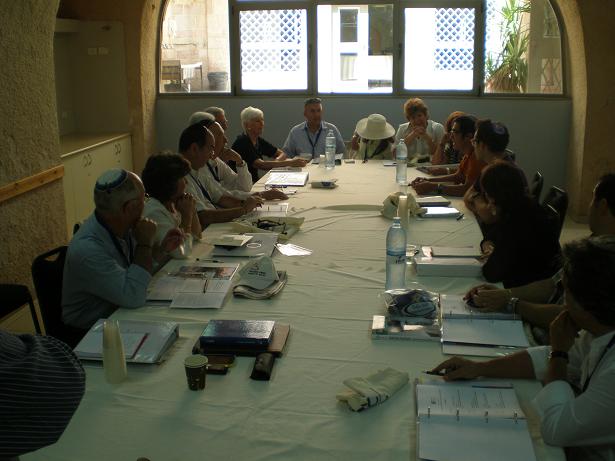
Tonight, nearly two dozen participants of the S.E.C.’s seminar this week in the Old City of Jerusalem were given a warm welcome by the organization’s faculty and founders at an opening dinner. Delicious food and incredible conversation were plentiful inside the dinning hall before the evening’s lecture began. The S.E.C.’s chairman Ron Nessim and S.E.C. founder Dr. Jose Nessim shared some insights about the organization’s objectives to of enhancing Sephardic Judaism through a traditional centrist direction.

Rabbi Bouskila, who organized the week long seminar in Jerusalem, introduced the evening’s keynote speaker, Dr. Zvi Zohar who is a Bar Ilan University professor and leading expert on Sephardic Jewish tradition. Zohar, who surprisingly is not Sephardic, has spent his career researching and writing about the analysis of “halacha” or traditions of Sephardic rabbis during the last 150 years. He has reviewed the writings or “responsa” these various famous rabbis have had to questions posed to them by rabbis in other cities and countries. What delighted those in attendance for the lecture was the fact that Zohar presented a wide range of information from different Sephardic rabbis who were grappling with the problems of interrupting ancient Jewish traditions and laws to fit modern problems Jews in their communities faced. For example, he pointed to early 20th century Rabbi Ya’akov Mizrahi of Buenos Aires, who wrote in one of his responsa regarding women’s studying of Torah. Professor Zohar said that a time when Jewish women were not permitted to study Torah or it was not the norm for them to do so, Mizrahi states that women should be permitted to study Torah in order to keep Judaism alive when raising their children.

I witnessed something very unique for the first time, the seminar’s participants had a lively debate on how one must adapt Sephardic Jewish traditions for the modern age without loosing its key points of importance. It was nice for a change seeing average Jews discussing an essential topic without getting too loud and out of hand! Another important point Zohar made during his lecture was that “the more you know about Jewish traditions (halacha) the more wealth of information to offer those with problems other options in dealing with questions about tradition”.

On an interesting note, I had the pleasure of sitting with Professor Zohar before his meal and he shed light on the fact that his interest in Sephardic Judaism began at a young age. He said after his older eastern European teachers in school referred to Sephardic Jews as “lazy” for not being committed to strictly keeping Judaism or remaining strongly secular, he was curious to find out why Jews who were originally from Islamic or North African countries were able to maintain a happy medium between strict religiosity and strict secularism. To his surprise he discovered that Sephardic religious leaders have always managed to find a happy medium for religiosity without forfeiting their long standing traditions.

-- Karmel Melamed


Here are just some of the photos I captured this evening...


(Dr. Zvi Zohar, Bar Ilan University professor and leading expert on Sephardic Jewish tradition and religious commentaries).


(Rabbi Daniel Bouskila, S.E.C. Director of Special Projects)


(Larry Azose, S.E.C.'s World Executive Director)


Returning home to Israel and S.E.C. again…


When Rabbi Daniel Bouskila, the director of special projects for the Sephardic Educational Center (S.E.C.) in Los Angeles asked to me to join him and a group of distinguished Sephardic Jews from Los Angeles and New York on a journey to Jerusalem as a blogger to chronicle their incredible one-week long seminar on the unique aspects of Sephardic Judaism, I jumped at the opportunity. Aside from the fact that I am and have always been a fan of journeying to Israel, the S.E.C. holds a very special place in my heart since I spent one month with the S.E.C.’s young adults program traveling all over Israel in 1996 with other young Jews after I had graduated from high school. (This was in the time before "Birthright"). At that time we spent a good amount of time at the S.E.C.’s building which is prominently situated at the entrance of the Jewish Quarter in the Old City of Jerusalem. The S.E.C.’s close proximity to the Western Wall allowed us young adults at that time a greater sense of Jewish spirituality. I knew no other person on the trip but the program laid out by the S.E.C. brought us all together. Ultimately I met three of my closests friends as a result of the S.E.C.'s remarkable trip. In the end, I walked away from that post-high school trip with very fond memories of Israel and the S.E.C.

This afternoon when I entered the S.E.C’s building here in Jerusalem, those great memories came rushing back and I was delighted to see incredible renovations made to the structure during the last 14 years. I think what delights many Sephardic Jews like myself, is the fact that we have a center or base in the heart of the Old City of Jerusalem dedicated to keeping our proud heritage, history and traditions alive. While the exterior of the center is covered with the traditional Jerusalem stone as required by the municipality, the interior of the building is quite new with dorms for young students visiting Israel, an area designated for eating, meeting halls and a lovely patio to delight in the outside weather. The S.E.C.’s base in Jerusalem in my opinion is also special because it brings together both the past and present of traditional Sephardic Judaism in an area holy to the Jewish people. For example, next door to the S.E.C.’s building here in Old City, one can find the well-known and historic “Four Sephardi Synagogues”. For these reasons and others I consider the S.E.C. here in Jerusalem “my home away from home” and will no doubt enjoy learning more about key areas in Sephardic Judaism through out the program this week.

-- Karmel Melamed


Before the participants entered the center for the start of this year’s program, I had a chance to capture these unique snapshots of the S.E.C.’s building…


(The S.E.C.'s patio area situated inside the building)


(A view of the Four Sephardi Synagogues from the S.E.C.)